

How Edge Computing Will Transform Healthcare
Edge computing can help reshape the way medical care is delivered, but obstacles to widespread adoption remain.

Cloud computing has been considered core to digital transformation for the last years. Sectors that have particularly high security standards such as the healthcare sector have always been reluctant to implementing cloud computing strategies. The reason is not limited to the need of cloud data loss prevention measures that could lead to disastrous results with patient data in danger but also to the availability of cloud technology that meets the requirements of healthcare companies. Edge computing could be the answer. Althought it is still in its early stages of application in healthcare, it is seen as a critical enabling technology for multiple health scenarios.
Defined as a distributed computing paradigm that brings computing and data storage closer to where data is generated and used, edge computing is a crucial part of the data ecosystem created by connected devices. Moreover, edge computing can support advanced remote monitoring of patients by processing data from medical devices such as blood glucose meters and blood pressure cuffs to warn doctors of problematic readings. It can provide on-demand content, augmented reality training and virtual reality training, and the proximity of edge computing devices ensures that there are no delays in the experience. It also allows medical devices to be managed in real-time while commuting between hospitals and facilities.
The confluence of health trends is driving interest and demand for edge computing, according to experts. The exponential growth of data-generating devices is one of the biggest factors fueling the need for edge computing. At the same time, the health sector is accelerating the adoption of algorithms, machine learning, and artificial intelligence. It also uses augmented reality and virtual reality for clinical care and training. Traditional telemedicine, even though it has experienced exponential growth during the COVID-19 pandemic, is already becoming outdated and patients’ needs drive the implementation of new technologies in healthcare, new technologies that need a highly advanced plattform to be built on.
During this years’s Health 2.021 conference by the Finanz und Wirtschaft Forum, industry leaders came together to discuss the recent developments of the Swiss healthcare sector. The corona pandemic has certainly changed the Swiss healthcare system. Breakthrough technologies such as artificial intelligence make possible entirely new applications that can put the patient at the center in the best possible way. I personally had the chance to discuss and understand the UK’s progressiveness in terms of digitalization and openness of the population towards new technology as illustrated by Wolfgang Emmerich and Jens Dommel with the impressive example of Zühlke Engineering having supported the development and launch of the NHS COVID-19 app in England and Wales. Within a couple of weeks the app was counting millions of users and steadily growing in terms of users and functionalities. The success of the app lies in its foundation of being entirely built on highly advanced Amazon Web Services technology, a success story that could be of interest for many healthcare companies as well.

Experts agree that the confluence of health trends is driving interest and demand for edge computing. The exponential growth of data-generating devices is one of the biggest factors fueling the need for edge computing and requires significant real-time data processing capacities to achieve viable results in healthcare. As healthcare expands beyond the walls of hospitals, physician examination rooms, virtual visits, remote monitoring of patients, and wearable devices for consumers will generate more data that physicians want to collect and analyze during their care. Figures from IDC Futurescape Worldwide Health Industry 2021 underscore this trend. By the end of 2021, 7 out of 10 leading wearable companies will launch algorithms to detect potential signs of infectious diseases such as COVID-19 and influenza. By 2024, the dissemination of data will result in 60% of healthcare organizations using IT infrastructure to build data platforms that use AI to improve processes and decision-making. By 2026, 65% of the medical imaging workflows will use artificial intelligence to diagnose underlying diseases and guide clinical interventions and 50% will use teleradiology and joint studies to improve access to radiologists. 60% of the providers will switch from proof-of-concept to full deployment of AR and VR technologies by 2025 to provide comprehensive training to healthcare professionals and improve customer experience.
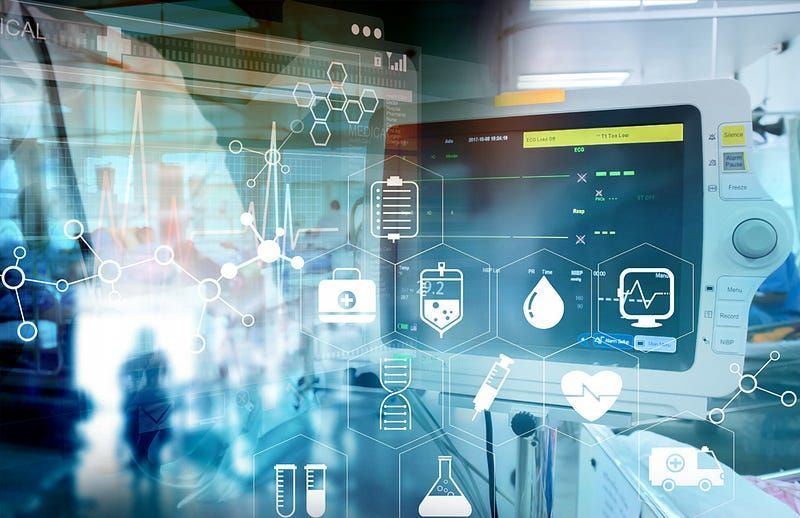
While much of the data currently ends up on central servers in the cloud, hospitals and on-site data centers, according to health IT experts, much data still needs to be collected, processed and stored locally before it can be generated and consumed. Experts say healthcare needs proximity and computing power, but the high cost of moving large amounts of data to the cloud and the limitations and latencies of the network are worrying.
According to IDC guidance on June 2021, healthcare providers will spend $103 billion in edge computing hardware, software and services by 2025, representing an annual growth rate of 17%. They note that much of the computing power that exists today on the fringes of health care is embedded in the devices themselves. Health and IT experts expect investment in cutting-edge technology to increase in the coming years, and with that growth, about a third of the world’s population is expected to change the way care is delivered.
Others envision transformative opportunities for edge computing in healthcare. Paramedics working from an ambulance can take photos and collect biometric data from patients from on-board medical equipment, which can then be analysed by modern equipment. The results can serve as a guide to their treatment, identify routes to alert emergency doctors and best prepare for their arrival. Edge devices can also perform real-time on-site data calculations and allow doctors to evaluate and treat patients on-site, helping to reduce unnecessary hospital visits. The widespread adoption of edge computing in healthcare could take years or even decades.
Healthcare institutions need to develop rigorous data policies and procedures as well as initiatives to use edge computing to protect patient data not only to protect sensitive data but also to identify the right data for each use. Otherwise, they will end up with too much data that generates noise rather than value.