
Top Marketing Trends for 2021: What You Need to Know
While there is no universal blueprint for how marketing will evolve in the next five years, marketers will have to work on their skillset…
The COVID-19 pandemic presents us all with troublesome challenges and forces us to deal with various uncertainties — this applies privately, professionally, but also socially and economically. Marketing is not spared from this. As a result, companies must find access to their customers today and what is important in brand development must be questioned in view of the current crisis. The goal is to find suitable answers for the “new normal”.
Trends in marketing
The best thing that we can do in order to respond to the need for new marketing trends is to remain flexible and adapt to the many technological innovations. This is the right strategy, since we should be aware of the main challenges in the business environment: an uncertain global economy, extreme uncertainty concerning the relationship with current suppliers, major challenges concerning product innovation, increasing complexity of market access and customer expectations, difficulties in the conduct of surveys and surveys’ validity, increasing competition, the constant need to find new opportunities for products, and, above all, disruption of marketing routines. The Deloitte Global Marketing Trends Report 2021 breaks down key insights for global CMOs. Fifteen experts from the Forbes Agency Council looked at the trends they believe will take over marketing in 2021 and what agency executives can learn from them if they become standard practice. The report, entitled “2021 Global Marketing Trends,” aims to help CMOs find solutions on how to win with the latest marketing trends and strategies.
To be successful in the fast-paced world of marketing, you have to be ahead of the game. It is easy to catch up on the latest marketing trends by scrolling through your social media news feed, but remember that sometimes your market can get very crowded when it’s too little or too late. Staying up to date with these trends will not take long for your business to thrive, generating six or seven-figure sales. To attract, engage and retain the best people, companies need compelling brand histories and positioning that come with remuneration. This is why brands pay attention to how important their employees are and what companies can offer users to navigate their ever-changing situation with COVID-19. More than ever, the way brands are coping with the crisis will affect current and potential customer relationships.
In the face of growing uncertainty about the spread of COVID-19 and its economic impacts, consumers and businesses around the world are increasingly more cost conscious, with cascading effects across multiple industries. Many businesses are responding to changing consumer needs, and some businesses are experiencing significant global growth. As budgets return to normal, marketers are expected to continue to rely on automation to improve efficiency and deliver results. By 2020, marketers will be able to make do with the tools they need to perform their normal tasks while saving resources.
Social media and customer behavior
People want to know that they can trust a brand and that their personal information is secure. One of the best ways for a brand to stand out is to develop and manage a strong, confident brand purpose that is authentic, mission-oriented and value-centered. A clear and powerful mission statement determines how a brand positions itself vis-à-vis its audience and customers and shapes the brand equity and the evaluation of the brand perceived by the public.
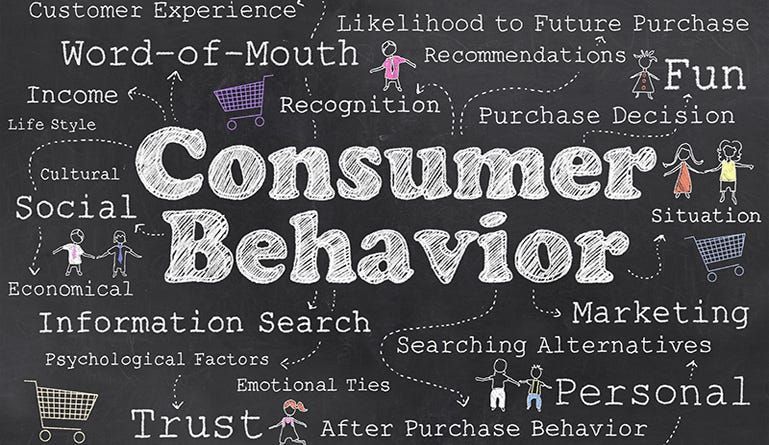
In 2021, direct customer relationships will be more important than ever as the online landscape becomes more confusing and brands seek to reach digital consumers.
We know that social media has been active in communicating information about this pandemic. But in the analysis that Deloitte carried out, they asked themselves how they could have the least impact on the crisis and still have a positive impact. They designed their strategy using a model for every possible possibility, by evaluating four main scenarios: 1) risk-reduction; 2) least impact; 3) most impact; 4) least impact. Social media is a necessity and an opportunity for companies and brands at the same time. If brands use the opportunities, this may have an effect on the negative media impact. It is better to invest the time and resources on engaging customers in communities in order to create new relationships. This is the best approach: an action-based one.
Improving the customer experience is a great way to improve your marketing. From experience-oriented retail to visual search, a better customer experience always ensures a more successful business. Word of mouth is one of the most effective marketing tactics; therefore it is wise not only to serve your customers, but also to equip them to become advocates and promoters of your brand. Businesses take a more personal approach to consumers, and this will improve the customer experience through marketing efforts that make it about the customer. One way to improve the customer experience is to connect with your customers on social media. The use of user-generated content and its innovative use can increase the attractiveness of your company and create further improvements over time. Brand storytelling is nothing new, but it remains one of the most important trends for the success of your business. Brand stories help companies connect with other businesses and consumers.
Marketing in the age of artificial intelligence
As already reported on CIO.com, the industry is facing a profound transformation. And, in particular, customer experience plays a key role in this. Today’s customer is digital, not yet aware of the evolution of technology that impacts on their everyday lives. The previous one worked within one’s own organization, isolated from the system, and its development and evolution remained as quiet as it could. Brands that want to improve their customer experience should consider thoughtful use of technologies such as AI, machine learning, augmented and virtual reality. These technologies will make the customer experience more efficient and open new opportunities for customers to engage and interact with brands. Customers today base their loyalty to brands on the experience they offer, but there’s so much more. Thanks to artificial intelligence and machine learning, companies will be able to take a different approach to marketing: recognizing the opportunities, how to develop the relationship and how to use the customer’s feedback and data — all in a single package.
Augmented reality
Augmented Reality is a technology that seems to come from a science fiction book or video game. Yet, thanks to some breakthroughs and years of research and development, such apps are now very much available. It is a very effective tool for marketers, which means that your company can take advantage of these innovations in the sales process. It enables your customers to virtually try products before they buy them — perhaps they will fall in love with it. Digital Art Digital Art has evolved from a simple image to a versatile medium that can be used to convey all sorts of messages. We have already seen this in the last few years, but there is still a long way to go.
Conclusion
People in 2021 want to make sure brands get their money’s worth and worry more about planet Earth than ever before. With 81% of consumers feeling that companies can help improve the environment, we will see a surge in popularity for sustainable and environmentally friendly brands, especially among younger consumers. The marketplace is changing dramatically, and there are no easy answers in sight: “the digital era” is not over yet; “experience” and “experiences” are becoming more and more important; customer loyalty is also an increasingly hard achievement. When considering the types of problems that companies face in their businesses today, it is understandable that they need guidance and reliable data and trends. The World Economic Forum study reveals data from the WEConnection project and the Best Practices research initiative to deliver real-time data in “real time”. Despite the level of transformation that we are experiencing, there are also promising opportunities on the horizon: Employees make the difference. According to Deloitte’s study, to address the pace of change, which has massively accelerated due to the impact of the pandemic, marketing decision-makers must drive talent transformation. It’s about simultaneously improving employee skills and competencies and creating the organizational flexibility to respond more quickly to market needs. After all, employees are the company’s most valuable asset. What interests and needs do employees have? How can they develop themselves further? Satisfied employees are more motivated and improve the external image of the brand.