Navigating the legal landscape of AI image use
The legal landscape surrounding AI and image use is a complex and evolving area, which requires careful navigation by all parties involved.
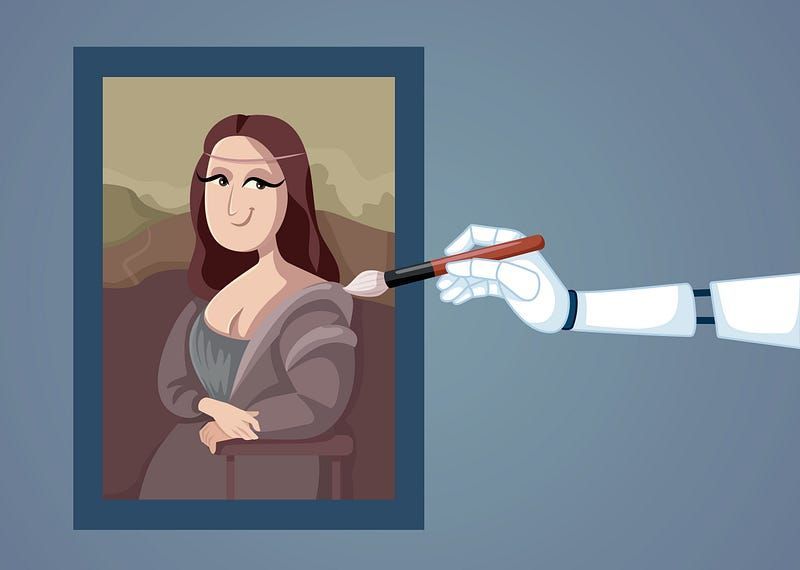
The use of images for training Artificial Intelligence (AI) systems has become a widespread and essential practice in the development of machine learning technologies. However, the legality of utilizing these images without permission has raised questions and concerns regarding copyright infringement. The Swiss newspaper Neue Zürcher Zeitung recently published an article examining the legal implications of AI using copyrighted images for training purposes. The purpose of this article is to explore the legal landscape surrounding AI and image use, the potential consequences of copyright infringement, and the possible future implications for AI development.
Copyright laws and AI image use
As AI systems rely heavily on vast amounts of data, including images, to learn and improve their capabilities, developers often resort to the internet to collect this data. However, the use of copyrighted images without permission or proper licensing can potentially result in copyright infringement claims. Copyright laws vary between jurisdictions, but they generally protect the rights of creators and copyright holders, granting them the exclusive right to reproduce, distribute, and publicly display their works. Under European Union (EU) copyright law, for example, the use of copyrighted images without permission for AI training purposes might be considered an infringement. In the United States, the Copyright Act provides a “fair use” doctrine, allowing the use of copyrighted materials for specific purposes, including research and education. Whether the use of images for AI training falls under the scope of fair use is still unclear and subject to interpretation.
Potential consequences of copyright infringement
The consequences of copyright infringement can be severe, potentially resulting in legal action, monetary damages, and reputational harm for the infringing parties. These consequences can significantly impact AI development, as companies and researchers may face legal challenges and substantial financial losses if found to be infringing on copyrighted material. AI developers may also encounter issues with licensing agreements for copyrighted images, as some licenses may not explicitly permit the use of images for AI training purposes. This can further complicate the legal landscape, as developers must navigate the fine print of licensing agreements to ensure compliance with copyright laws.
Emerging legislation and the future of AI
As AI technology continues to advance, lawmakers and regulators around the world are grappling with the need to create new legislation that addresses the unique challenges posed by AI. Some proposed legislation aims to protect the rights of copyright holders while also fostering innovation and AI development. In 2021, the European Commission proposed new legislation on AI, which included provisions on copyright and data usage. Under these proposed rules, AI developers would be required to obtain permission from copyright holders before using their images for training purposes. This approach may strike a balance between protecting the rights of creators and enabling the continued growth of AI technology. Another possible solution to the issue of copyright infringement in AI image use is the development of new licensing models. These models would specifically address the needs of AI developers while protecting the rights of copyright holders. For example, the Creative Commons organization has proposed the development of a new license type specifically designed for AI and machine learning applications.
The legal landscape surrounding AI and image use is complex and evolving, with various jurisdictions interpreting copyright laws differently. As AI technology continues to advance, the need for clear and consistent legal frameworks becomes increasingly important. By addressing the unique challenges posed by AI, lawmakers and regulators can create legislation that protects the rights of creators while fostering innovation and technological progress. AI developers must remain vigilant in navigating the legal landscape, ensuring that their use of copyrighted images complies with existing laws and licensing agreements. As new legislation and licensing models emerge, the future of AI development may become more secure and less fraught with legal challenges. However, the delicate balance between protecting copyright holders’ rights and enabling AI innovation must be maintained to ensure the continued growth and success of this rapidly evolving field.
Collaboration between stakeholders
To navigate the legal landscape effectively, collaboration between AI developers, copyright holders, and regulators is essential. Open communication and mutual understanding can facilitate the development of legislation and licensing models that cater to the needs of all parties involved. For AI developers, understanding and respecting copyright laws and licensing agreements can help prevent legal challenges and maintain a positive reputation within the industry. By actively engaging with copyright holders and seeking permission to use their images for AI training purposes, developers can foster good relationships and demonstrate their commitment to ethical practices.
Copyright holders should also recognize the potential benefits of AI technology and the need for their works to be accessible to AI developers. By working with AI developers and licensing organizations, copyright holders can develop licensing models that accommodate the specific needs of AI while protecting their rights. Lastly, regulators must remain informed about the advancements in AI technology and its implications on copyright laws. By collaborating with AI developers and copyright holders, regulators can create legislation that strikes the right balance between protection and innovation.
Education and awareness
Raising awareness and educating both AI developers and copyright holders about the legal landscape is critical. As the legal implications of AI image use become increasingly complex, it is essential that all parties involved understand their rights and responsibilities. Industry associations and government agencies can play a significant role in providing education and resources to AI developers and copyright holders. By offering seminars, workshops, and guidelines, these organizations can help stakeholders navigate the evolving legal landscape and minimize the risk of copyright infringement.
In conclusion, collaboration, education, and awareness are essential for striking a balance between protecting the rights of copyright holders and fostering AI innovation. As the legal framework continues to adapt to the rapid advancements in AI technology, it is crucial that AI developers, copyright holders, and regulators work together to ensure a future where creativity and technology can coexist harmoniously.
Sources
- Neue Zürcher Zeitung. (2023). Darf eine KI mein Bild zum Trainieren nutzen? Das sagt das Urheberrecht. Retrieved from https://www.nzz.ch/technologie/darf-eine-ki-mein-bild-zum-trainieren-nutzen-das-sagt-das-urheberrecht-ld.1730537?reduced=true
- European Commission. (2021). Proposal for a Regulation on a European approach for Artificial Intelligence. Retrieved from https://digital-strategy.ec.europa.eu/en/library/proposal-regulation-european-approach-artificial-intelligence
- U.S. Copyright Office. (n.d.). Copyright Law of the United States. Retrieved from https://www.copyright.gov/title17/
- Creative Commons. (n.d.). Creative Commons and Artificial Intelligence. Retrieved from https://creativecommons.org/about/program-areas/technology/ai/
- World Intellectual Property Organization. (n.d.). Copyright and Related Rights. Retrieved from https://www.wipo.int/copyright/en/
- Samuelson, P. (2016). Big Data and the Growing Challenge of Copyright Misuse. Berkeley Technology Law Journal, 31(1), 55–86. Retrieved from https://scholarship.law.berkeley.edu/btlj/vol31/iss1/3/