
Business Growth And Branding Through Influencer Marketing
Is Influencer Marketing really to be considered as one of the next big things in marketing?

While working on a business model for the watch brand DsY Watches with my business partner Dennis Matter, I analyzed different watch companies. Daniel Wellington is what I consider as the best possible example to what extent an extensive Influencer Marketing Strategy can help a brand grow quickly in the digital world. Daniel Wellington has built its strategy exclusively around influencer marketing and they did it very well. This is something we will definitely consider with DsY Watches. But let’s have a look at some key findings regarding this next big thing in marketing which is already present in daily business across the globe.
Influencer Marketing is a form of social media marketing involving endorsements from influencers like celebrities, a popular fashion photographer or a CEO with many contacts on LinkedIn. Their large following on social media platforms make them influential. The main and classic influencer marketing examples are Instagram photos of an influencer posing with the promoted product. “An influencer is someone with the collective ear of a large audience that is a group of potential buyers in your market.” (Jeff Bullas)

The benefits of influencer Marketing
As you know, Influencer Marketing is the fastest-growing segment of advertising, because the average person spends every single day up to two hours on social media on their mobiles, computers, laptops etc. Due to this, it is hard to argue against working with online influencers. Furthermore, traditional advertising do not have the reach or impact they once had. Hubspot reported the average click-through rate on display ads is less than 1 percent and that nearly 70 percent of people skip the ads that play before online videos. Influencer Marketing lets you reach a specific audience to collaborate with the right influencer that you wish.
How does influencer marketing work?
First, you need to find an “influencer” who has accrued a following that closely aligns with your ideal audience. If you pay for influencer marketing campaign, it could cost you a great deal. However, it depends on the influencer’s star power — but you will receive more in return. Paid influencers will be more proactive in promoting your brand. On the one hand, influencers with many followers or contacts could post pictures on Instagram, share tweets on Twitter or post videos on YouTube about the brand/product. On the other hand, any real influencer is unlikely to want to deal with you at all if they do not like your product.
How much do influencers charge per post?
Here is an example how much an influencer marketing campaign costs and how much you should pay an influencer. The cost is affected by the social media platform, following, engagement, product, direct partnership or agency and campaign. Every social media platform has its own “market” rate.
Snapchat ($10 per 1,000 followers)
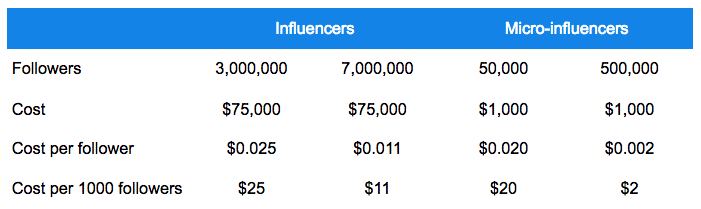
YouTube ($20 per 1,000 subscribers)
“For YouTubers with more than 50,000 subscribers, marketers can add roughly $2,000 per 100,000 followers per video, up until around 1 million subscribers, at which point a dedicated video could cost upwards of $25,000-$50,000, according to Langer.”
3. Instagram ($10 per 1,000 followers)
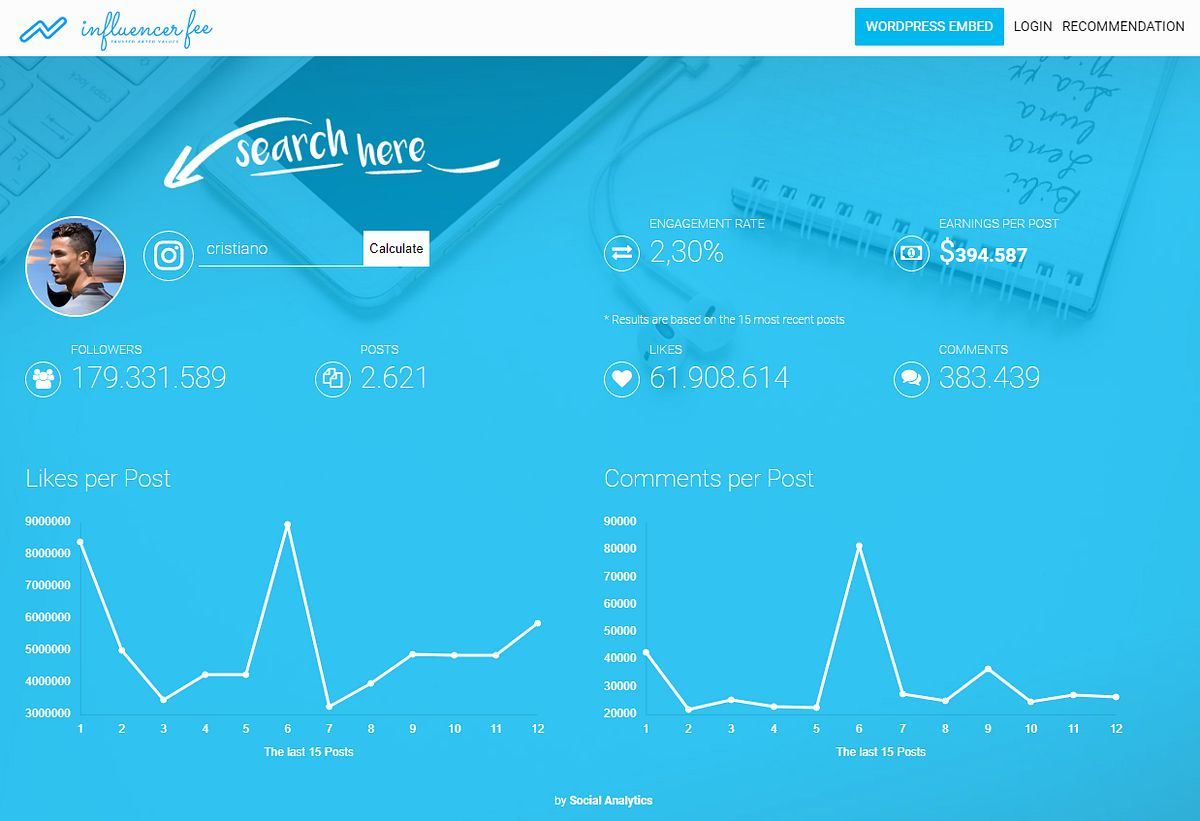
There are many calculators for estimating the earning per posts for example https://influencerfee.com/ by simply entering the username of the Instagram influencer e.g. Cristiano Ronaldo. According to Influencerfee, Cristiano earns $394.587 per post.
Dangers and disadvantages
Of course, every marketing action also implies a certain risk. You never know 100% how the audience reacts. There may also be problems due to delays or other unforeseeable things. Many followers are bought or fake and do not bring any interaction or conversions. Another risk is, that influencer marketing is often perceived as advertising and tends to deter the target group. According to a study by the BVDW in 2017, 74 percent of a survey did not perceive the presentation of products or services in the contributions of the influencers as advertising. Thus, the great advantage of discipline over traditional advertising formats would continue.
The fact is, the opportunities for influencer marketing is huge — but also the associated risks and obstacle.